A precision-engineered data tape archive for a world leader in digital technology.
The project involved creating a fully compliant fire-rated enclosure within an existing warehouse in Vantaa, Finland, designed to store nearly two million data protection digital linear tapes on a mobile racking system with hand-wheel drivers and anti-tip control. The facility was built for a world leader in digital technology.
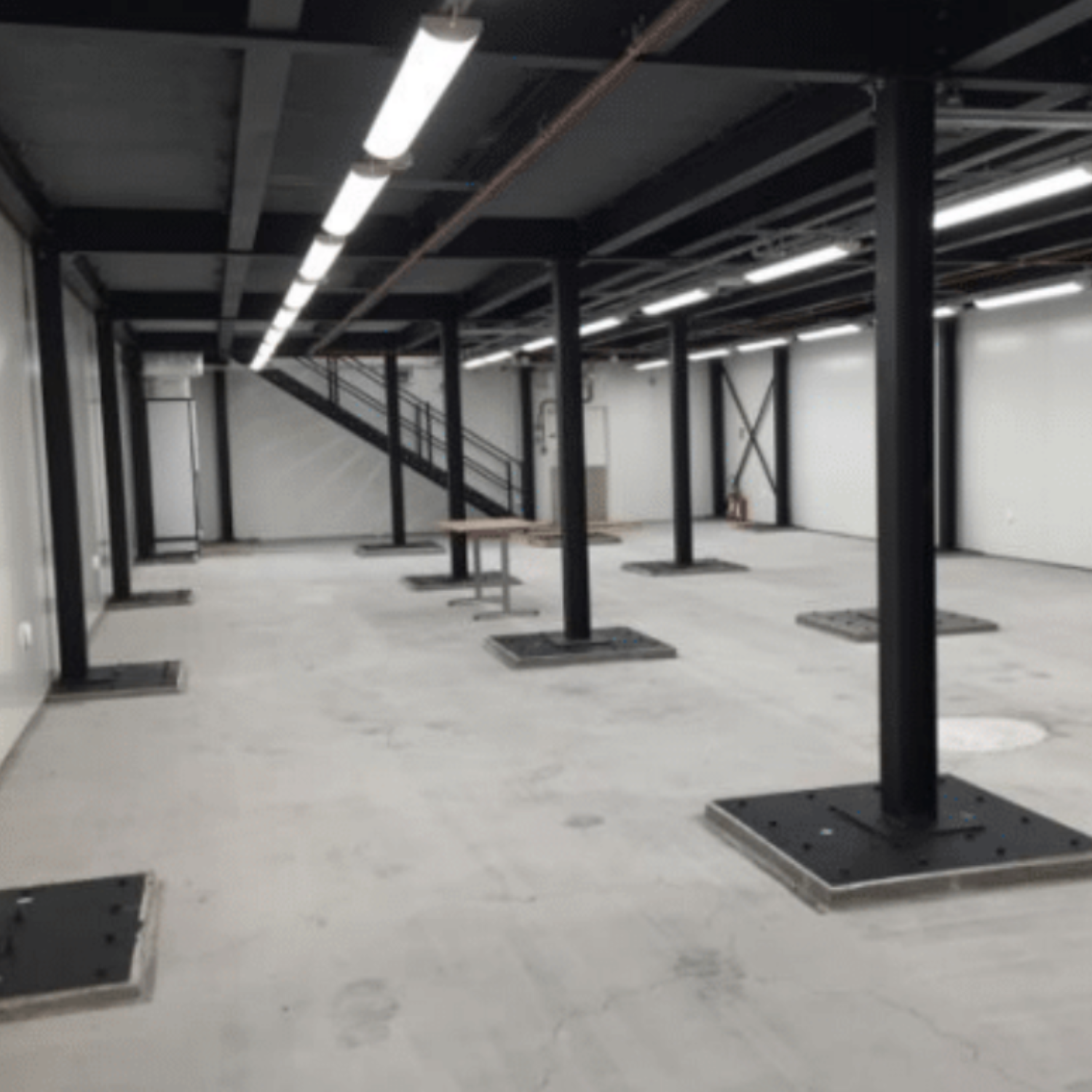
To maximise storage capacity, a steel mezzanine structure was constructed within the warehouse to accommodate a two-level fire-rated tape storage enclosure. The existing floor slab required levelling and reinforced concrete overlay, with enlarged base plates to support the structural loads given the composition of the floor beneath.
The enclosure was equipped with aspirating smoke detection combined with gaseous fire suppression to NFPA 2001, close control air conditioning maintaining a precise 18 degrees plus or minus one degree for tape integrity, fresh air ventilation, energy-efficient lighting controls and a comprehensive security system covering CCTV, intruder detection and access control.
Full multi-disciplinary design, project management and cost control from a single appointment.
Osborn Associates produced detailed and fully coordinated designs for the entire scheme: the mobile shelving system, lighting and small power, close control air conditioning, aspirating smoke detection, gaseous suppression systems and all fire system interfaces. The critical requirement was that every element functioned as a single composite system - detection triggering suppression, suppression coordinating with ventilation, climate control maintaining tape storage conditions throughout.
The company project managed the entire construction process from site offices in Finland, including structural consultant appointments, contractor procurement and approvals, cost management and client reporting. On-site management covered construction sequencing, safety, deliveries and building code compliance.
Precision construction within a secure, live environment on a demanding programme.
The project faced several intersecting challenges. The existing floor slab required structural assessment and reinforcement before the mezzanine could be erected - the composition of the ground beneath the new concrete layer dictated the base plate sizing and load distribution strategy.
The secure environment demanded strict access controls throughout the construction period, limiting the flexibility of working patterns and delivery logistics. Building a multi-level steel and fire-rated panel structure within an occupied warehouse while maintaining the client's existing operations required careful sequencing and close coordination.
Despite the demanding construction programme and the complexity of integrating structural, mechanical, electrical and fire protection systems into a precision-controlled environment, the scheme was completed on budget with access for the client's local business team achieved on programme.