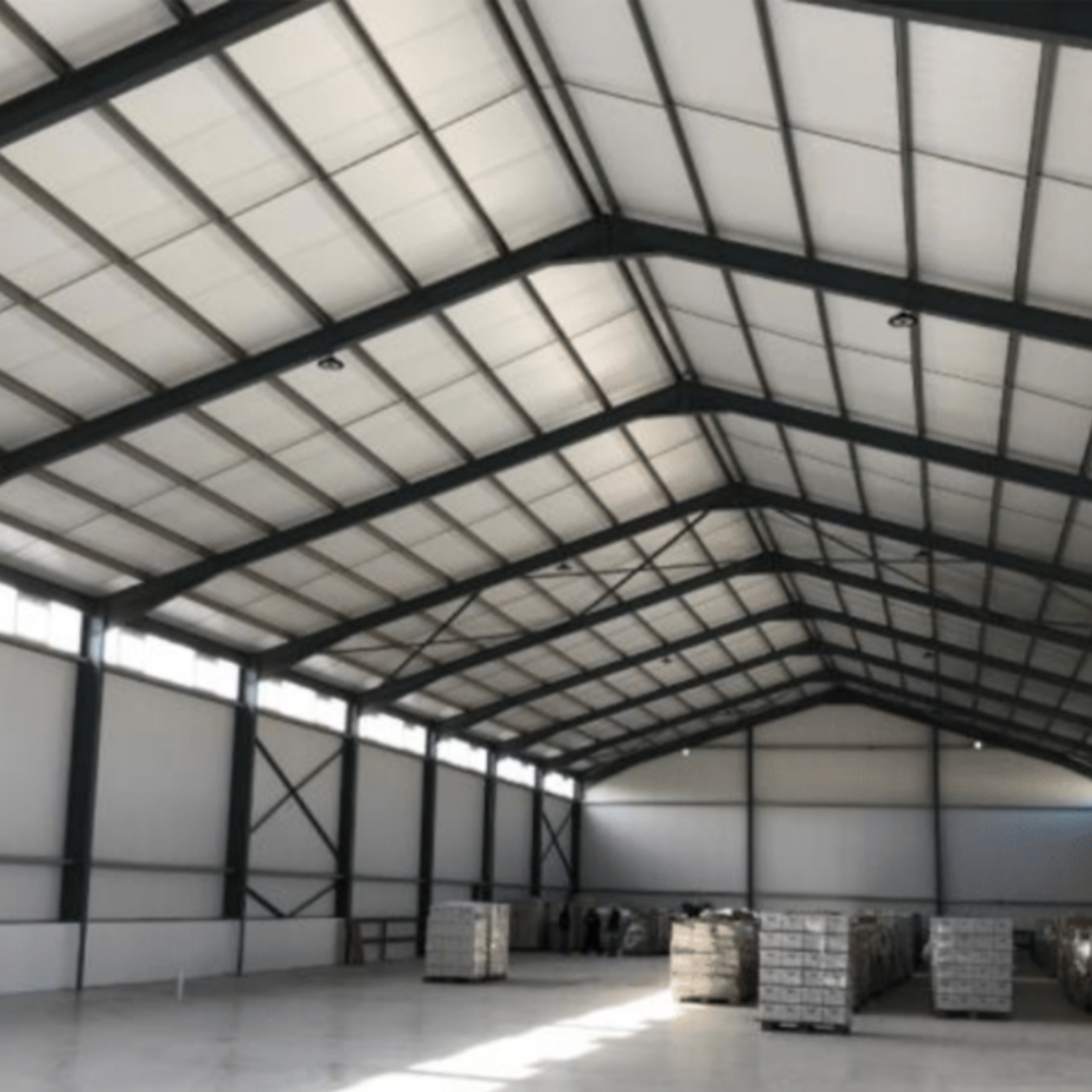
A major building services upgrade and extension to one of Greggs' key production bakeries.
The project involved a comprehensive building services upgrade and 1,000 square metre extension to the Greggs bakery at Treforest, Pontypridd. The 5,200 square metre facility includes bakery production areas, offices, changing rooms, canteen, storage areas and freezer spaces - all requiring coordinated mechanical, electrical, public health and fire protection services.
The scope covered new HVAC installations for the extended areas alongside repairs and upgrades to the existing systems, new public health installations throughout the site, and a complete new refrigeration package to BS EN 378 including two main freezer units and three blast freezers. Despatch and transit areas received new dehumidification systems to maintain the controlled conditions required for food production.
Full MEP concept design, contractor review and site inspection through to EPC certification.
Osborn Associates provided the full building services concept design for the scheme, followed by review and approval of contractors' detailed drawings and tender documents. The company carried out site inspections throughout the installation stages to ensure compliance with the design intent and relevant standards.
The electrical installation was designed to BS 7671, the fire detection system to BS 5839-1 incorporating aspirated smoke detection, standard smoke and heat detection and manual call points across the new office block, freezer areas and upgraded spaces. CCTV to BS EN 50132 Grade 3 was provided with specialist equipment rated for the low-temperature environments, alongside access control to BS EN 50133 Grade 3.
The company also prepared SBEM calculations and the Energy Performance Certificate, managing the more restrictive Welsh building energy performance requirements that applied to the site's location.
Energy-efficient systems designed to minimise consumption across a high-demand facility.
The heating systems were engineered with hybrid high-performance VRF units, with particular care taken to avoid thermal losses through pipework distribution and crossings. Energy-saving equipment was specified throughout, including LED lighting and devices selected for low standby consumption - critical in a facility that operates continuously.
Delivering a major building services upgrade within a live food production environment.
Bakery production is classified as essential, which meant the entire project had to be delivered while the factory maintained full operational output. Working zones needed to be isolated and temporarily compartmented to allow construction activity to proceed without interrupting production - a complex logistical challenge in a facility where food safety, temperature control and air quality are all critical.
The Welsh location also brought more restrictive building energy performance requirements than an equivalent English site, requiring the SBEM calculations and overall energy strategy to be managed accordingly.